
Buying a light fixture is not like buying furniture: what the customer needs to confirm is not only what the lamp looks like, but the light it throws. Color temperature, beam angle, how crystal or brass behaves under illumination, these decide whether the piece fits the space, and a static photograph shows none of it. What a lighting 3D configurator does is move everything that used to require a showroom visit onto the web, letting buyers adjust first and inquire after.
The industry has started moving. Marsden Lighting launched a 3D lighting selection system built on seven textures, eight colors and twelve styles, combining into hundreds of variants, with reduced dealer sample investment named explicitly as the benefit. Direction proven; the open questions are how to build it and how much to build.
Lighting Adds One Variable Furniture Never Has: Light
Furniture configurators combine materials and colors. Lighting carries another layer entirely. The same pendant at 3000K and 5000K creates two different rooms; a diffused shade and an exposed source are two different products. These are exactly the points where buyers hesitate longest.
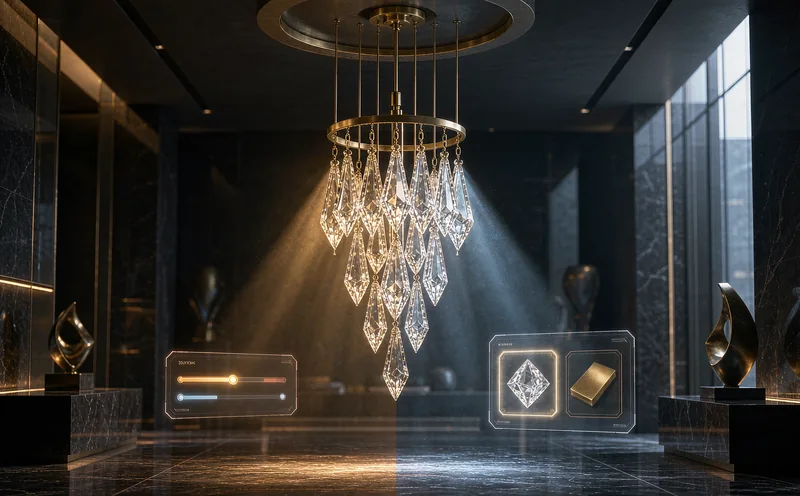
All of it simulates honestly in 3D. Color temperature is a light parameter, beam angle is a cone adjustment, and PBR materials reproduce crystal refraction, brushed metal anisotropy and fabric translucency according to physical rules. A buyer drags a slider from warm to cool and the wall glow shifts in real time, which answers "what does this look like in my room" rather than "what did it look like in a photo studio". No collection of photographs can make that claim.
Dealers and Project Buyers Want Different Things
For dealers, the headline value is sample reduction. One series with hundreds of combinations cannot be displayed physically, and stocking it fully would swallow the showroom. Configure online, confirm key pieces in store, and sample counts drop by more than half. That is a real cost line for regional dealers and a genuine selling point when recruiting them.
For project buyers, the priority is pre-installation confirmation. A ballroom chandelier's diameter, drop-rod length and clearance interact with ceiling height and beams; crystal refraction can throw ugly patches onto a stone wall, and day versus night are two different effects. True-scale 3D rehearsal catches these on the drawing, which costs far less than rework after installation. The same logic carries into other B2B selection systems, as the machinery selection system case shows.
Export adds time zones and distance: buyers who cannot ship samples or visit factories use a self-serve page for material, glow and interface checks, moving the first technical conversation online.
Managing the Combination Explosion
Hundreds of combinations sound great and break easily. Too many options make pages chaotic, and a buyer who hits a contradictory pair loses trust immediately.
Parameters link to keep it coherent. Crystal shades narrow the compatible source list automatically. Diameter above one meter triggers a ceiling-height confirmation. Textures limited to certain finishes simply never surface with unsupported colors. The rules come from product logic and must be organized on the product side first; skipping that step makes everything afterward harder. Before budgeting, it is also worth settling the build route, which our comparison of custom build, plugin and SaaS covers.
On the modeling side, two things matter: material fidelity and model weight. Crystal refractive index, paint highlights, anisotropic brushed metal, PBR channels tuned to real values so close-up inspection does not break the illusion, while single-model size stays low enough for phones to open instantly. The best light simulation is worthless if the page never gets to show it.
Xuanji Animation has delivered five hundred plus projects over more than eight years, and multi-variable selection categories like lighting and furniture have always held a major share. Our view is that lighting suits configurators even better than furniture, because its decision variables include one thing no static medium can express, light. To evaluate a specific line, the custom 3D configurator development page is the entry point.
Related Q&A
How many models does a lighting configurator need?
Model by structure, not by combination. One base model per series body, with textures, colors and sources layered as parameters, so hundreds of combinations do not mean hundreds of models. Separate models are only needed where structure differs: pendants, wall lamps and floor lamps are different builds.
How realistic can the light simulation get?
Color temperature, beam angle and intensity are physical quantities in the renderer, so setting real values reproduces the result closely. Complex optics like crystal caustics will not be one hundred percent, but they are fully sufficient for selection decisions and project rehearsal.
Is it worth it for a small brand?
Depends on combination count and order value. Few styles, few combinations, low tickets: strong photography wins. Many combinations, deep customization, high tickets: saved samples and communication recover the investment quickly. The judgment method is the same as any category, count the decision variables first.