
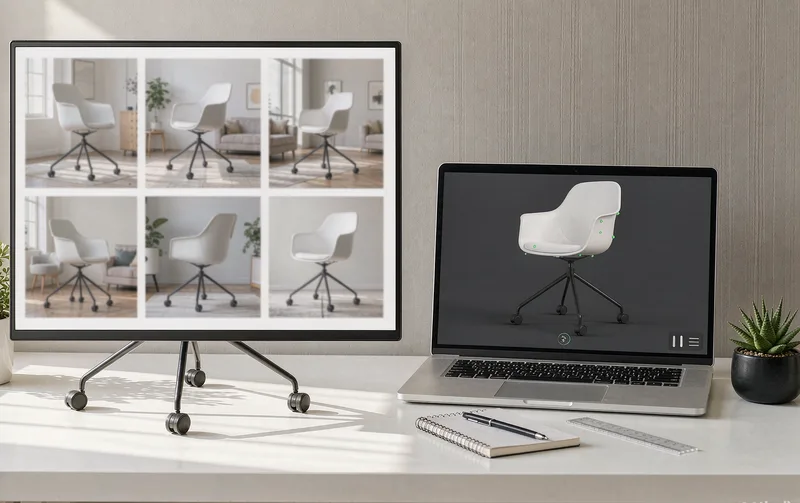
Put a 3D interactive product page next to a flat gallery and the difference is not about looking prettier. Shoppers spend 45–60 seconds on a flat product page before moving on. On a 3D interactive page, the same kind of visitor stays two to three minutes, add-to-cart rates run 40–81% higher, and conversion climbs another 15–30%. Those numbers come from Web3D studios and research firms publishing their own measurements, and when you unpack them, the gap concentrates in three small behaviors.
The numbers first
Average dwell time: 45–60 seconds flat, 120–180 seconds interactive, two-and-a-half to four times. Pages per session rises from 2.1 to 3.3–3.9 screen. Add-to-cart goes from 3.2% to 4.5–5.8%, conversion from 1.5–2% to 1.8–2.6%. None of these are dramatic in isolation. For a store with steady traffic, a 40% lift in add-to-cart is simply more orders.
Three behaviors, not three features
Turning, replacing the fixed angle shoot. Nobody has to accept the three photos you chose. They drag, they inspect the base, the back, the underside. Toyota's SUPRA interactive viewer works exactly this way: free zoom and rotate on desktop and mobile, paint colors swapped on the spot, doors opened, dimensions pulled up on demand. A buyer "touches" the car before visiting a dealer, and most of the uncertainty is gone by the time they do. Clicking, replacing the spec sheet. Drop hotspots onto the product and let shoppers open them: the weave on a sneaker upper, the finish on a metal bracket, the thickness of a panel. Nike's product pages have used hotspots to explain materials for years, and it beats making customers infer quality from a paragraph of specifications. And the most underestimated one: letting customers see their own version. Change color, material, component, and the model follows. The item stops being "a product" and becomes "mine." We ran that math in our furniture configurator return-rate analysis — configured orders carried 20–30% higher average order values.
Which categories respond best
High ticket, long consideration, details deciding the sale: automotive, furniture, industrial equipment, jewelry, precision instruments. These buyers are doing research online, not impulse buying. The better they can inspect, the sooner they decide. Flip it around and low-ticket commodity items gain little. Nobody rotates a nine-dollar phone case for two minutes.
A bad build is worse than no build
An honest warning. If the initial model payload takes more than three seconds, more than half your visitors leave before anything renders. Let polygon counts run wild and mid-range phones drop to 30 frames, and the interaction feels worse than static images. Skip a fallback and low-end devices get a white screen. Hit any one of those and the add-to-cart lift you calculated evaporates. The industry standard is unglamorous: 60 frames per second on mid-range phones as a hard target, Draco compression to shrink geometry, LOD tiers, and a low-detail shell on first paint that gets replaced progressively. Engineering details, but they decide the outcome.
Don't let the interaction be the finish line
The last trap is treating the configurator as the destination. The shopper turns, selects, configures — and then what? No price, no inquiry form, no add-to-cart, and the visit was a museum tour. The fix is wiring the configuration straight into the next step: generate a quote, prefill an inquiry form, or push the exact configuration into the cart. When we build 3D configurator development projects, that handoff is always on the acceptance checklist — a beautiful model with a broken exit is worth zero. And bring the data back: which options people linger on, where they drop off. That tells you more than the conversion rate alone.
FAQ
Can I apply these numbers directly to my store?
No. They aggregate measurements across multiple vendors and reflect direction and magnitude. Your actual lift depends on product complexity, traffic quality and implementation quality. Run an A/B test on one or two hero products for two to three months before believing anything.
Limited budget — interaction or content first?
Content. With no traffic, a beautiful product page has no audience. Once organic and paid traffic stabilize, upgrade the hero products to interactive 3D for the best return.
Is the mobile experience actually usable?
That depends entirely on the build. Designed to 60fps with payloads under 5MB and a proper fallback, mobile feels close to desktop. Shove the raw model in and phones will crawl. Ask any vendor to demo live on a mid-range phone — that test beats a folder of case screenshots.